Gift-giving in Pakistan is a serious matter. It carries the weight of relationships, occasions, and — more than we admit — the unspoken desire to be understood. We want the recipient to open the box and feel, for a moment, that someone saw them clearly. Not just their name on a wishlist, but the person beneath the name.
RUMI accessories make this possible in ways that most gifts cannot. They are beautiful enough to be desired, meaningful enough to be remembered, and personal enough to say something true about both the giver and the recipient.
The man who buys RUMI for himself is the man who knows that the details of a life — the small choices, the quiet rituals — are where character is actually formed. He is educated, thoughtful, and curious. He reads. He notices things. He has, perhaps for the first time, found a Pakistani brand that speaks his language.
And so RUMI becomes the perfect gift for the same kind of man, in the life of whoever is doing the giving. The father who deserves more than a perfume. The husband who notices fabric. The colleague being celebrated. The friend who moves through the world with intention.
“Sell your cleverness and buy bewilderment. Cleverness is mere opinion, bewilderment is intuition.”
— Rumi
RUMI understands that a gift is not complete at purchase. It completes itself in the moment of discovery. This is why the brand offers its Signature Gift Experience — a deep-black carrier bag lined with crisp white butter paper, each sheet embossed with the RUMI logo, adding a layer of mystery and elegance to the unboxing.
The most memorable gifts are not the most expensive. They are the most considered. They say: I thought about you specifically. I chose something that speaks to who you are, not just what the occasion demands.
A RUMI pocket square says: I know you care about beauty in the small things. A pair of RUMI cufflinks says: I know you carry your standards even to the wrist. A silk tie says: I believe your presence in any room deserves to be felt.
These are not decorations. They are declarations. And at RUMI, they come wrapped in the philosophy of a man who understood, eight centuries ago, that everything of worth begins within. Explore the RUMI gift collections and Signature Gift Bag at rumi.com.pk. Free shipping across Pakistan. Delivered in Islamabad within 24 hours.
Most men get dressed. Fewer men dress. The difference is not time, money, or wardrobe size. It is attention. It is the willingness to treat those quiet minutes each morning not as a chore to be completed, but as a practice to be inhabited.
RUMI was founded on a simple, radical belief: that style is not what you wear, but the quality of awareness you bring to wearing it. This belief did not come from fashion. It came from Jalaluddin Rumi, the 13th-century Sufi poet whose words have outlasted empires precisely because they spoke to something unchanging in human nature — the desire to live with depth.
Pakistan’s fashion market has, for most of its history, been constructed around women. The bridal industry, the seasonal collections, the magazine covers — all feminine by default. Men who cared about how they dressed were left with limited options: tailors who replicated the same safe silhouettes, or imported brands whose prices made intentional dressing feel exclusive to the wealthy.
RUMI’s founders saw something different. They saw a generation of Pakistani men who wanted to look considered — not loud, not borrowed, but genuinely their own. Men who would respond to craft, to story, to beauty that came from somewhere real.
“You were born with wings, why prefer to crawl through life?”
— Rumi
RUMI does not offer a uniform. It offers a vocabulary. The Sufi pocket squares bring spiritual geometry into your everyday. The cufflinks are compass points reminding you to stay oriented. The silk ties draw a line from intention to expression.
Together, they are not just accessories. They are a practice. A daily reminder — placed close to the body, worn against the skin — that the journey within is always available, always beginning, always yours.
RUMI is based in Islamabad, Pakistan. Every piece is crafted to accompany the thoughtful man on his inward journey. Visit rumi.com.pk to begin yours.
The tie has a complicated reputation. Once the undisputed crown of a man’s wardrobe, it retreated from offices, restaurants, and weddings under the pressure of “smart casual” and “business relaxed.” Men stopped wearing ties not because they stopped caring about appearance — but because the ties they found no longer seemed to care about them.
RUMI’s silk ties enter this conversation quietly, without manifesto. They simply exist: beautiful, purposeful, and rooted in a design tradition that makes them feel inevitable rather than imposed.
Silk is not nostalgia. It is physics. The way light moves across a silk tie — catching in one place, falling away in another — creates a visual warmth that synthetic fibres simply cannot achieve. A silk tie changes with the wearer. In morning light it reads differently than under an evening chandelier. It absorbs the character of the day.
RUMI’s silk ties are the natural extension of the brand’s pocket square philosophy: that what sits close to a man’s body should carry meaning, not just pattern. The same geometric traditions — Islamic architecture, Sufi sacred art, the tilework of Morocco and Andalusia — flow into the tie’s design language.
“I have lived on the lip of insanity, wanting to know reasons, knocking on a door. It opens. I have been knocking from the inside.”
— Rumi, Masnavi
There is a meditative quality to tying a tie well. The Four-in-Hand for everyday ease. The Half Windsor for measured formality. The Full Windsor when the moment calls for complete command of the room. At RUMI, we encourage men to bring the same consciousness to the knot as to the fabric: slow down, be present, and tie it as if the day matters — because it does.
The RUMI silk tie is not merely a new product. It is the completion of a wardrobe philosophy. Pocket squares speak. Cufflinks anchor. The silk tie connects — drawing a line from collar to conviction.
Explore the silk ties collection at rumi.com.pk.
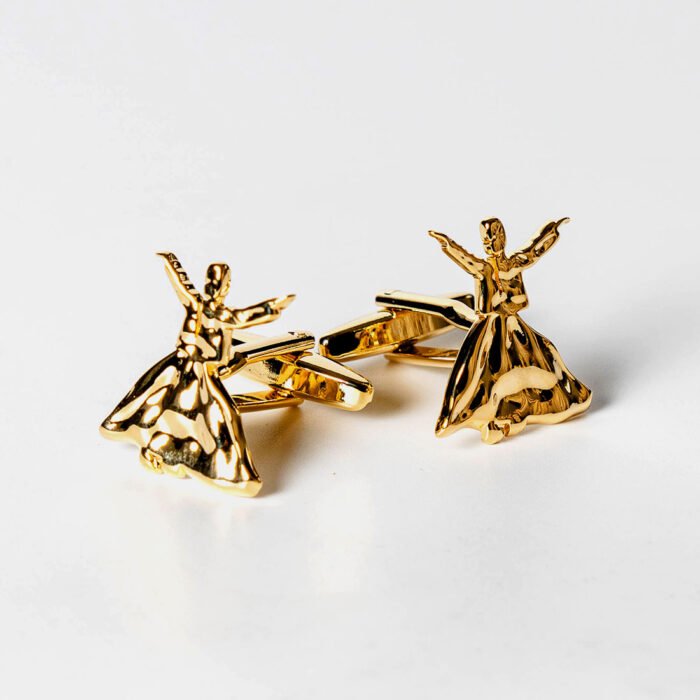
Look at a man’s wrists. Not at his watch — though that matters — but at the precise point where his shirt ends and the world begins. The cufflink occupies that threshold. It is a tiny object in an enormous conversation, and yet men who understand elegance know: the smallest details carry the heaviest meaning.
At RUMI, cufflinks are not decorative trinkets. They are designed as what the brand calls “a compass for the journey within.” Each design encodes a symbol, a story, a reminder to carry through the day.
For decades, cufflinks in Pakistan were reserved for wedding guests and foreign-returned professionals. The everyday man reaching for his dress shirt rarely paused to consider what his wrists were saying. That is changing. A new generation of Pakistani men — educated, conscious, globally curious — is rediscovering the art of intentional dressing. RUMI was born exactly for them.
“Let the beauty of what you love be what you do.”
— Rumi
RUMI’s cufflinks draw heavily from the geometric tradition of Islamic art — the same tradition that produced the tilework of the Alhambra, the arabesques of Topkapi, and the star-patterns of Lahore’s Badshahi Mosque. The Moroccan Colourful Cufflinks, the Ethnic Mosaic Cufflinks, the Crimson Grid — each is a small window into a universe of ordered beauty.
The Moroccan Colourful collection uses hand-inlaid enamel in jewel tones — the kind you find in a Fes fountain at noon, when the light catches the zellige tiles at exactly the right angle. The Ethnic Mosaic translates the patchwork of nomadic textile traditions into a face that sits at your wrist with quiet authority. The Crimson Grid is more severe — a disciplined geometry for the man who prefers his beauty structured.
A cufflink is a small commitment. Choose one that means something. At RUMI, every design carries the weight of a tradition and the lightness of a well-told story. The journey within begins at the wrist. Explore the full cufflinks collection at rumi.com.pk.
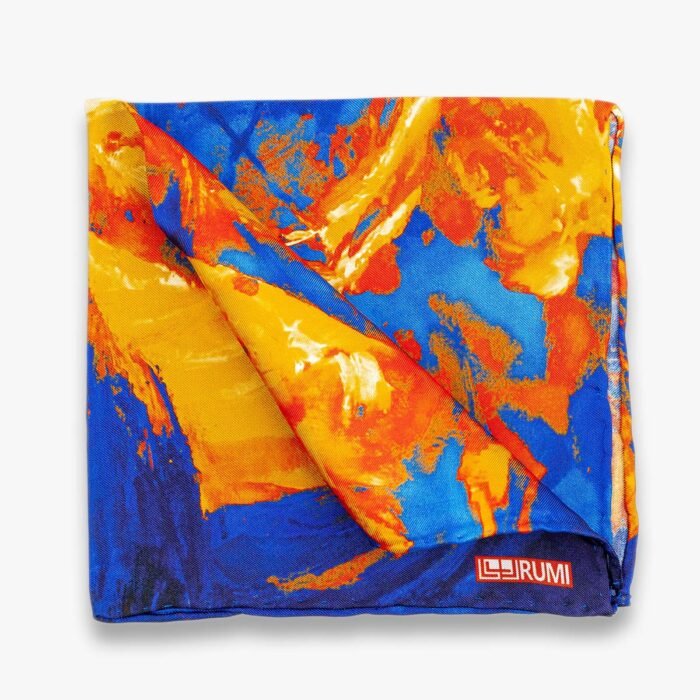
There is a moment — before a word is exchanged, before a handshake, before a name is given — when a man is already communicating. It is the moment someone notices the small silk square rising from his breast pocket. Not shouting for attention, but quietly declaring: I pay attention to things that matter.
At RUMI, we believe the pocket square is not an afterthought. It is the opening verse of your personal poem. And like all great poetry, it rewards those who look closely.
The pocket square has dressed kings, poets, and mystics for centuries. In Mughal courts, a fine cloth folded at the chest signified refinement and rank — not wealth alone, but culture. In the Ottoman world, the artistry of a fold communicated mood and occasion. The tradition ran through the salons of Europe and arrived, somewhat flattened, into the modern suit. RUMI restores its soul.
“Out beyond ideas of wrongdoing and rightdoing there is a field. I’ll meet you there.”
— Rumi, Masnavi
This verse speaks of a space beyond the ordinary. RUMI’s pocket square collections — Sufi, Fes, and Haroof — inhabit exactly that space. Each piece emerges from pattern traditions that predate fashion itself: geometric devotion, calligraphic breath, and the mathematics of beauty found in Islamic art.
The Sufi pocket squares draw inspiration from the whirling dervish — not the spectacle, but the stillness at the center of that motion. The circles, spirals, and radiating geometries on each piece mirror the cosmic order that Sufi mystics found in the turning of the heavens. Wear one and carry a meditation in your pocket.
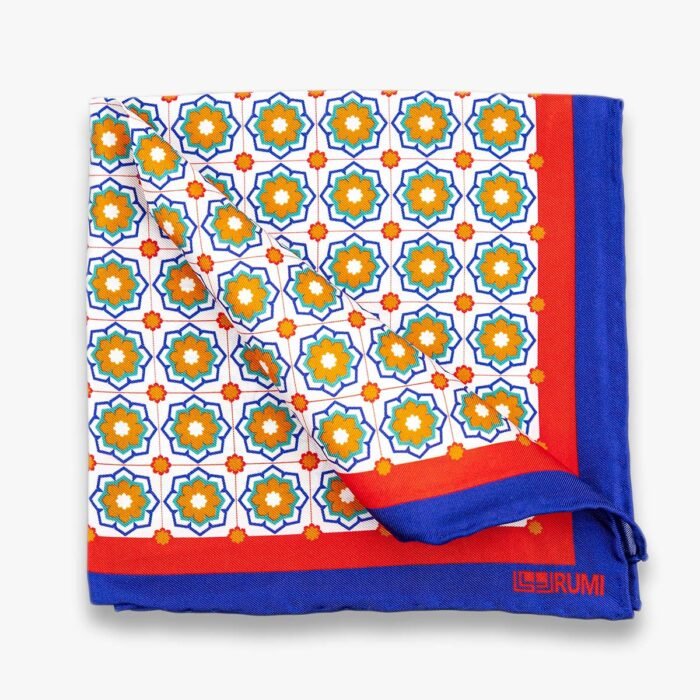
Fes, Morocco — a city whose medina is a living monument to sacred geometry — lends its name to RUMI’s most intricately patterned collection. The tilework of Fes has inspired architects and mathematicians for centuries. These pocket squares translate that language into something you wear over your heart. The tessellations breathe. The colors speak of mosaic courtyards at midday, of cool shade in ancient halls.
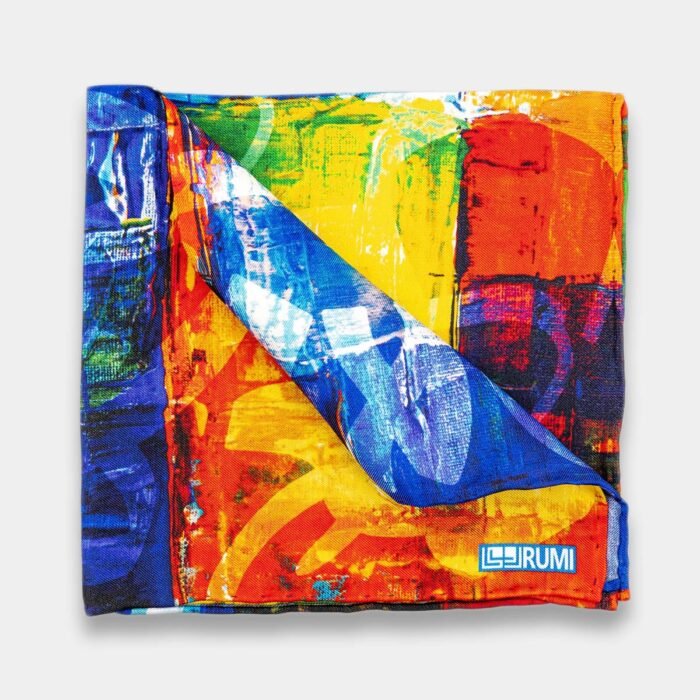
The Haroof collection draws from the calligraphic tradition — Arabic letters rendered not as words to be read but as forms to be felt. Each piece is a visual poem, a composition where meaning and beauty are inseparable. Paired with a plain suit or a formal kurta, it draws the eye without demanding explanation.
The fold is as important as the fabric. RUMI recommends approaching your pocket square the way a craftsman approaches a tool — with knowledge and ease.
Whatever your fold, remember this: the pocket square is not decoration. It is punctuation. A period at the end of a sentence your outfit has already begun to speak. Choose it with care. Fold it with intention.
RUMI’s pocket squares are individually hand-hemmed in 100% silk. Explore the Sufi, Fes, and Haroof collections at rumi.com.pk — each piece a companion for the journey within.