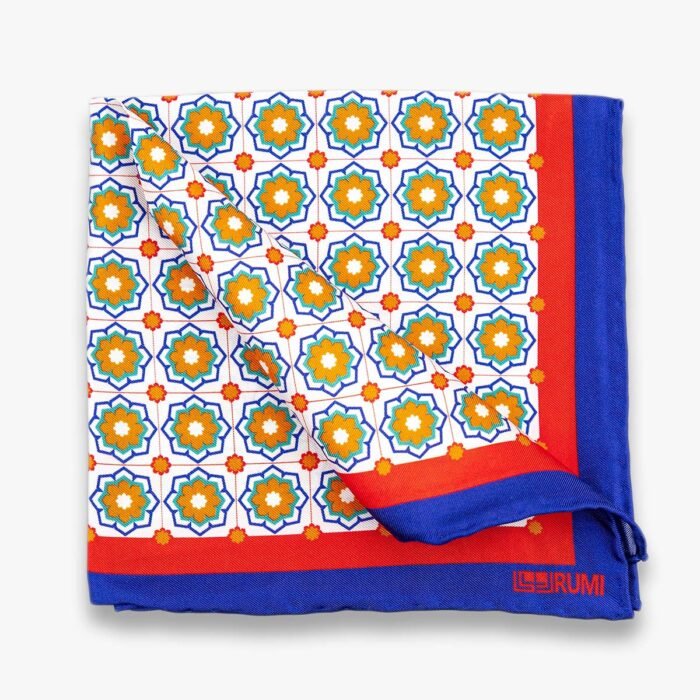
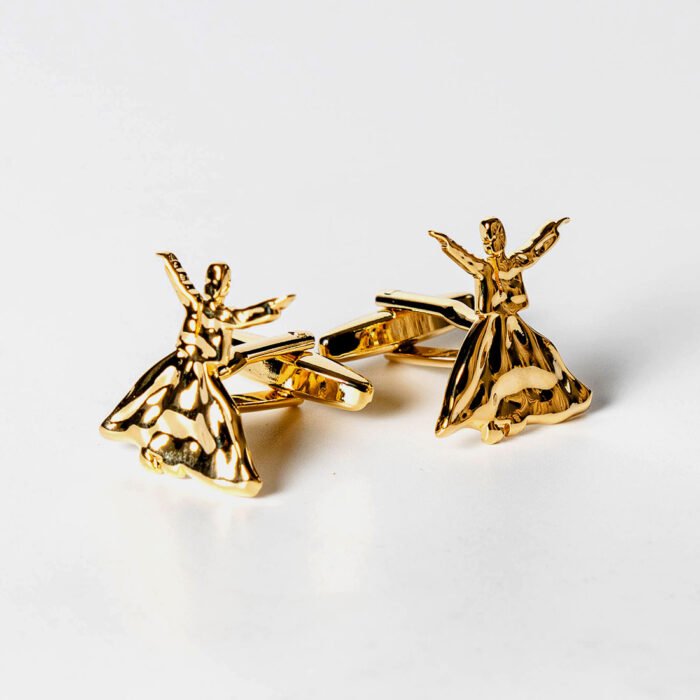
Look closely at almost any RUMI piece and you will find geometry. An eight-pointed star on a cufflink. A grid of interlocking tiles on a pocket square. Small medallions repeating down the length of a tie. None of these shapes were invented by us. They belong to one of the great visual traditions of the world, and they have been refined over more than a thousand years.
In Morocco, and especially in the old city of Fes, craftsmen have long practised zellij: mosaic made from hand-cut glazed tiles. Each small piece is chipped into shape by hand and fitted into a larger pattern, often radiating out from a central star.
The colours are bold, the precision remarkable. Up close, you see the hand of the maker in every slightly irregular edge. From a distance, the pattern resolves into perfect order.
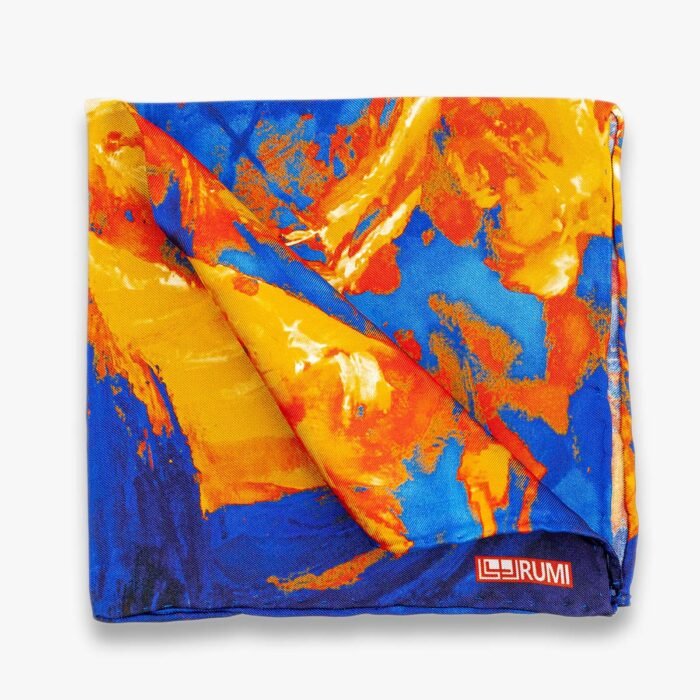
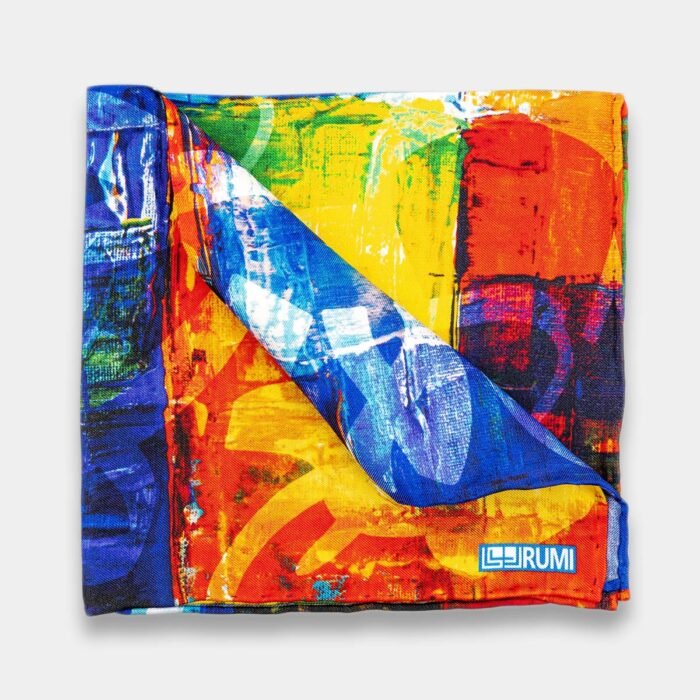
Our Fes Collection of pocket squares takes its name and much of its spirit from this craft. Zellij Sunset, with its orange ground and blue border, and Crimson Grid, in deep reds, both translate the logic of tilework onto silk. The Cedar Compass does the same on a white ground, which makes it one of the easiest Fes pieces to wear.
Across the Strait of Gibraltar, in southern Spain, the same visual language reached a high point in the palaces of Andalucia, most famously the Alhambra in Granada. Walls, ceilings and floors are covered in geometric tilework, carved plaster and repeating patterns that seem to have no beginning and no end.
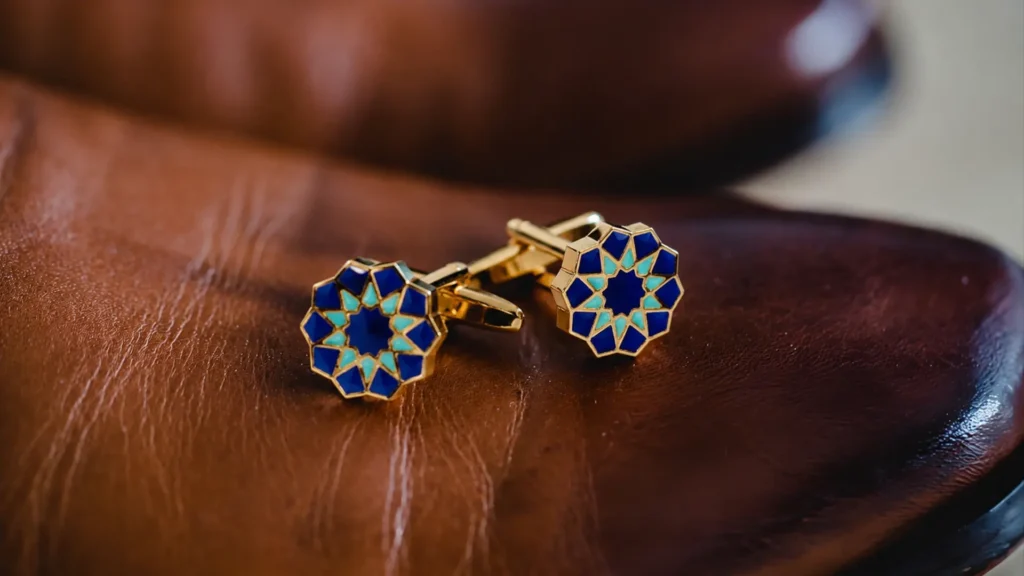
Our Andalucian cufflinks are drawn from this architecture. Andalucian Gold and Andalucian Colourful take the geometric motif and compress it into a form small enough to sit on a cuff, while keeping its sense of order.
The eight-pointed star appears again and again across these traditions, and across our collections. It is formed by overlapping two squares, one turned by 45 degrees. It is simple to construct and endlessly adaptable: it can stand alone, repeat in a grid, or sit at the centre of a larger pattern.
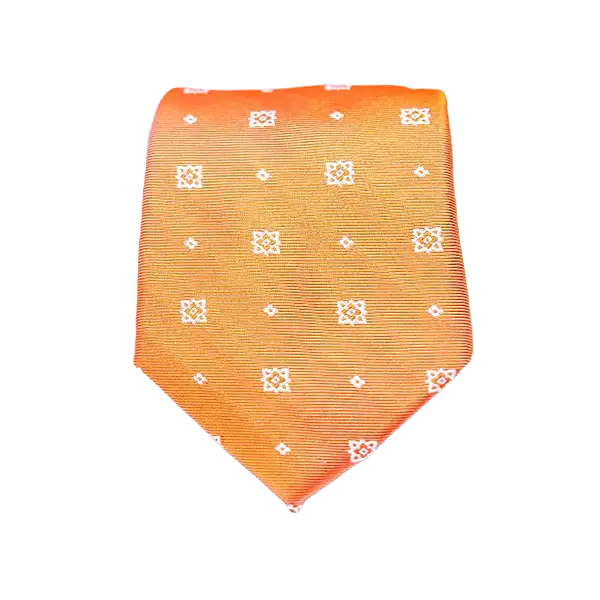
You will find it on Saffron Gate and Lapis Green among the ties, and on the Ethnic Mosaic cufflinks.
Geometric pattern suits menswear for a practical reason: it reads as order. A tie with a regular geometric pattern looks deliberate and composed, even when the colours are bright. That is why a saffron or teal geometric tie can work in a formal setting where a loud floral would not.
It also works at every distance. From across a room, a geometric tie reads as texture. Up close, it reveals detail. That double life is part of what makes these patterns so enduring.
None of this needs to be explained to anyone who sees you. The pattern does the work quietly. But it is worth knowing that the star on your cuff connects you to tile-makers in Fes, builders in Granada and centuries of artisans who believed that order and beauty were the same thing.